Sited at 10th Avenue and 20th Street in Chelsea, this arts community center
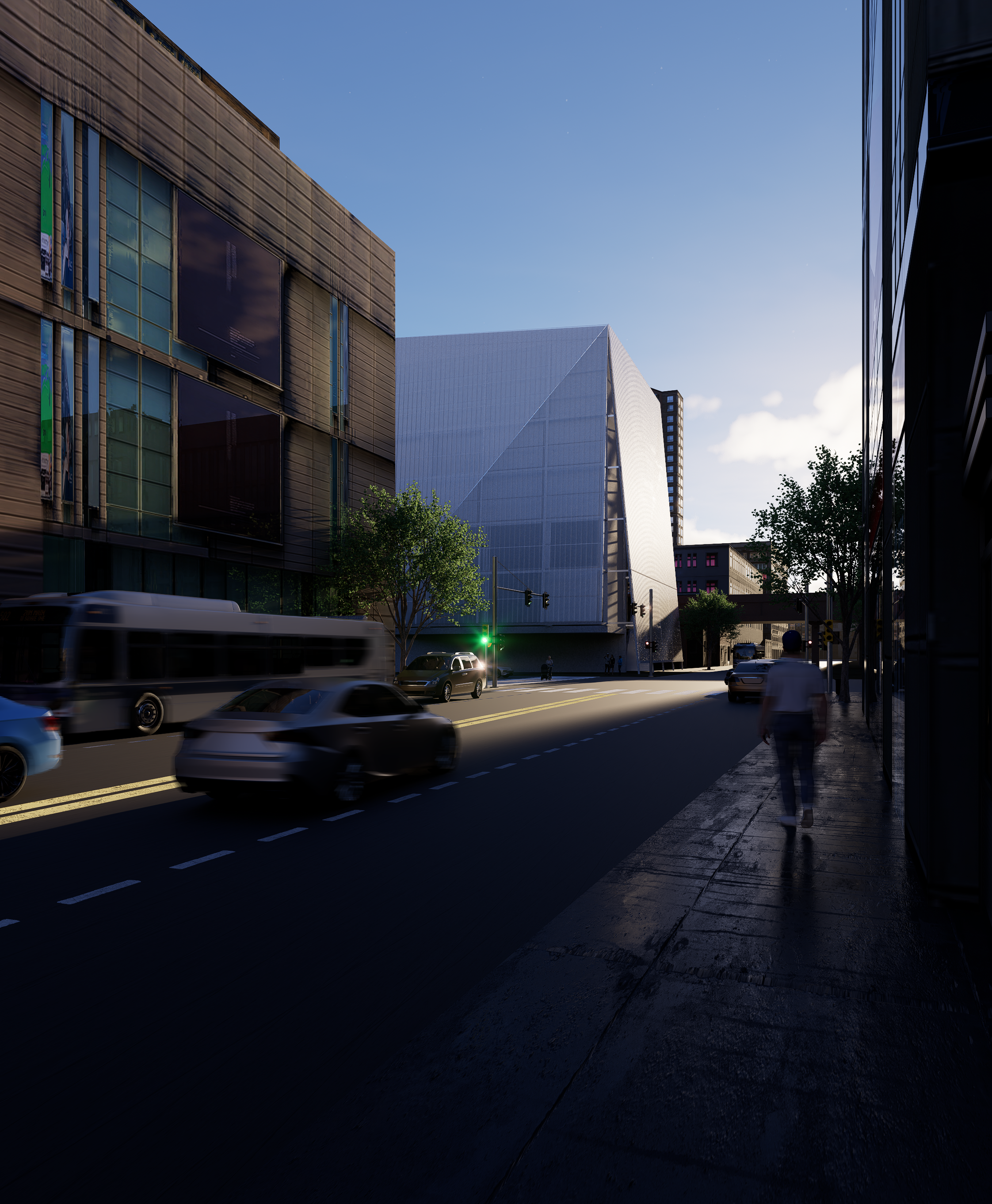
behaves less like a monument and more like a threshold. The façade fans open
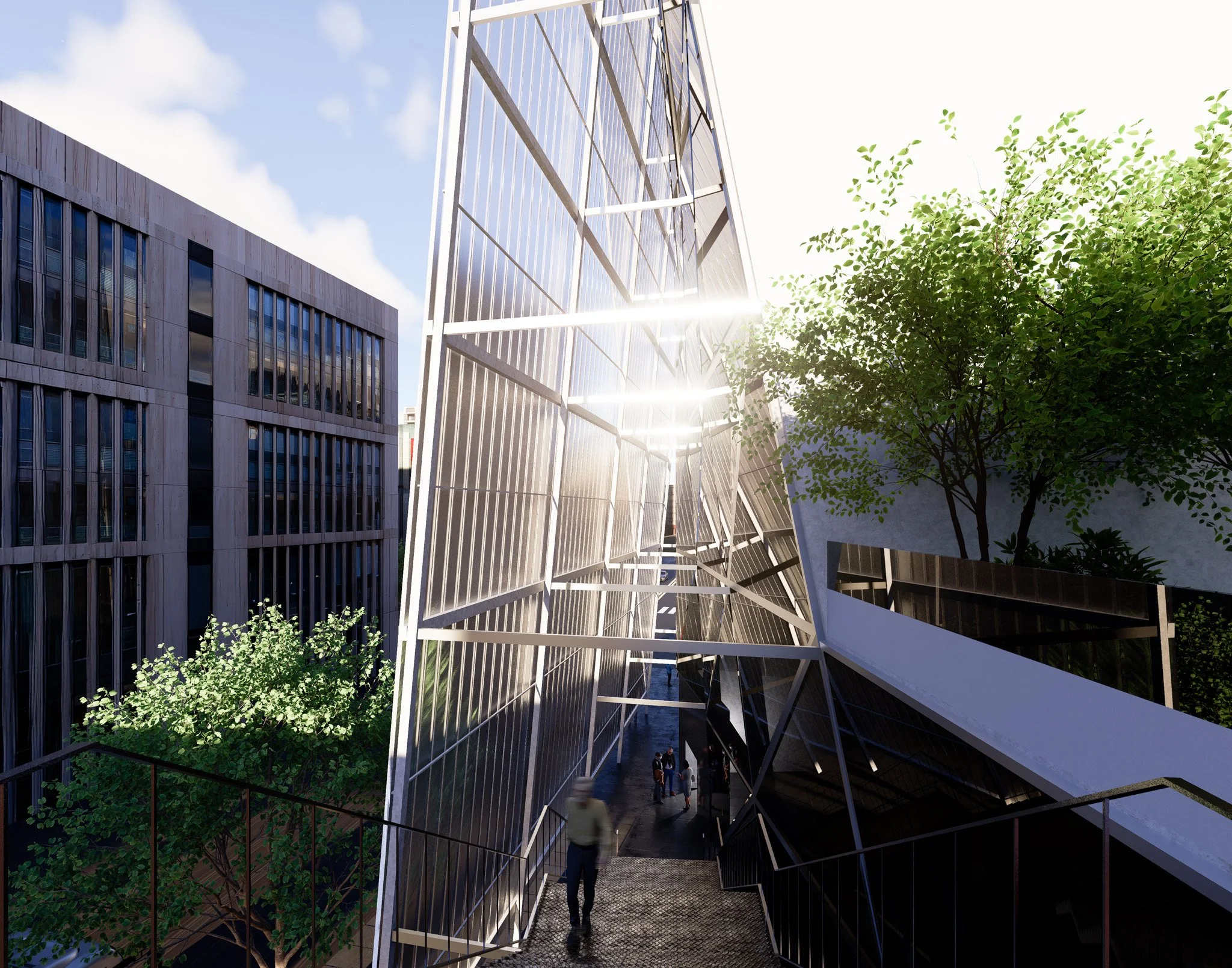
toward the sidewalk, folding visitors beneath the lip of an oversized shading de-
vice that doubles as the building’s public face.
The first floor is rotated off the building’s axis to make a civic gesture at street
level, opening a reveal that pulls people under the canopy and into the building.
A fully glazed wall runs along that rotation, so passersby can read the life inside
while still standing on public ground. Sheltered under the shading device, the
space feels neither fully inside nor fully outside.
That ambiguity is the point. The public access to the High Line is routed be-
neath the same canopy, so visitors moving from street to park pass through the
building’s envelope without ever entering a private room. The shading device
works as a veil, resolving the elevation into one continuous surface while quietly
enclosing a generous piece of public realm. You are inside the building and still
in the city.
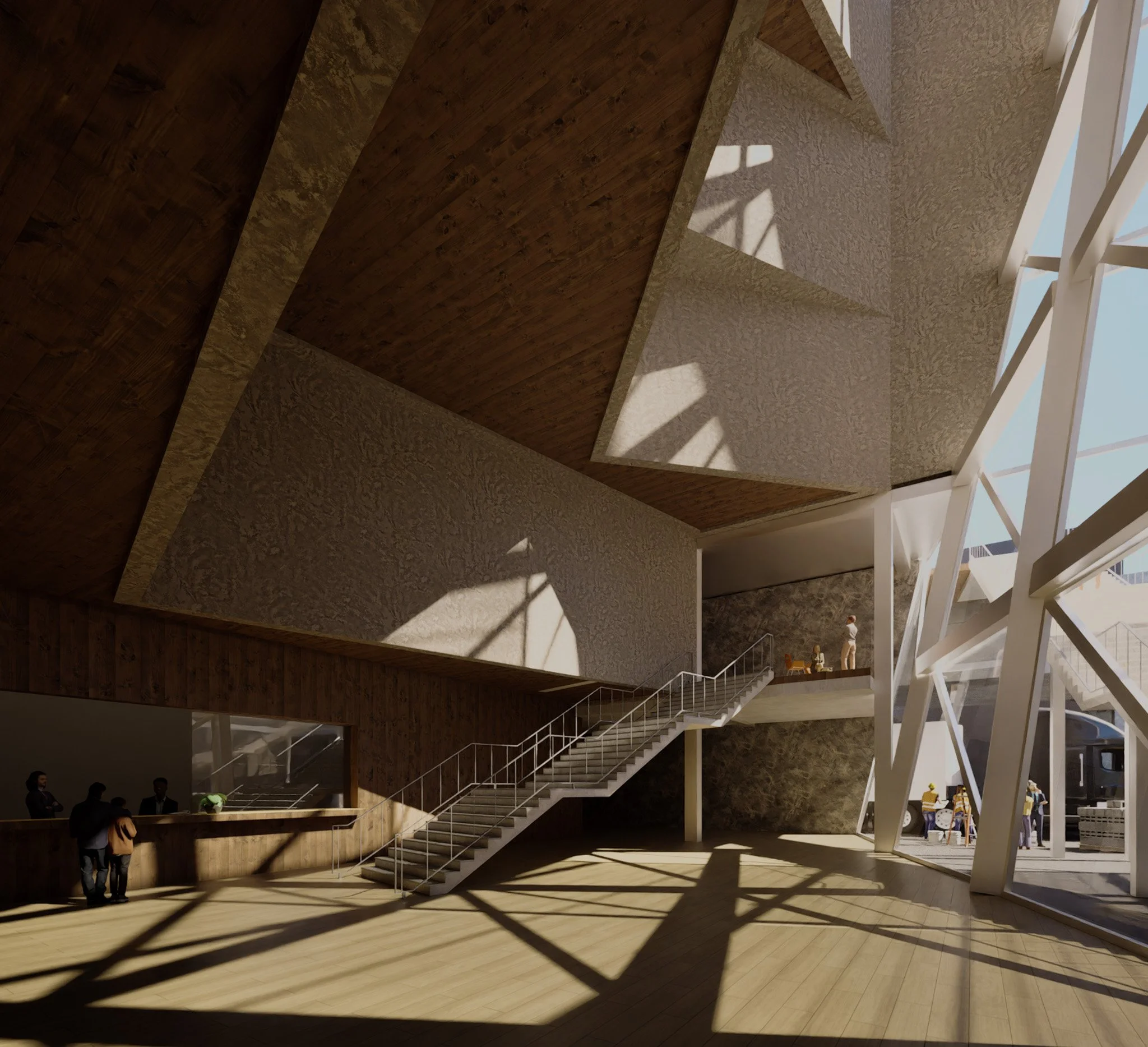
Inside, the atrium and staircase do the connective work. Large masses are rotat-
ed against each other to produce a carved, sculptural interior, with faceted tim-
ber ceilings and canted walls that read as subtraction rather than addition.
The program stacks vertically, with reception and offices at the base rising
through a youth center, library, gallery, dance studio, and theater at the top, all
bound together by the atrium. Rather than announcing itself, the building per-
forms its civic role through gesture, opening and gathering to offer Chelsea a
space that meets the street on its own terms.
